Businesses everywhere are under pressure to do more with less; less waste, fewer emissions, and lower environmental impact. …
Circular Economy vs. Recycling: Why the Difference Matters for Your Business
If someone asked you to explain the circular economy, would “recycling” be the first word that comes to mind? You wouldn’t be alone. It’s one of the most common mix-ups in sustainability conversations – and for busy business leaders, it’s an easy one to make.
But treating the two as interchangeable can mean missing out on the bigger opportunity. Recycling is one small piece of the puzzle. The circular economy is the whole picture – and understanding the difference could reshape how your business thinks about cost, waste and growth.
What recycling actually does
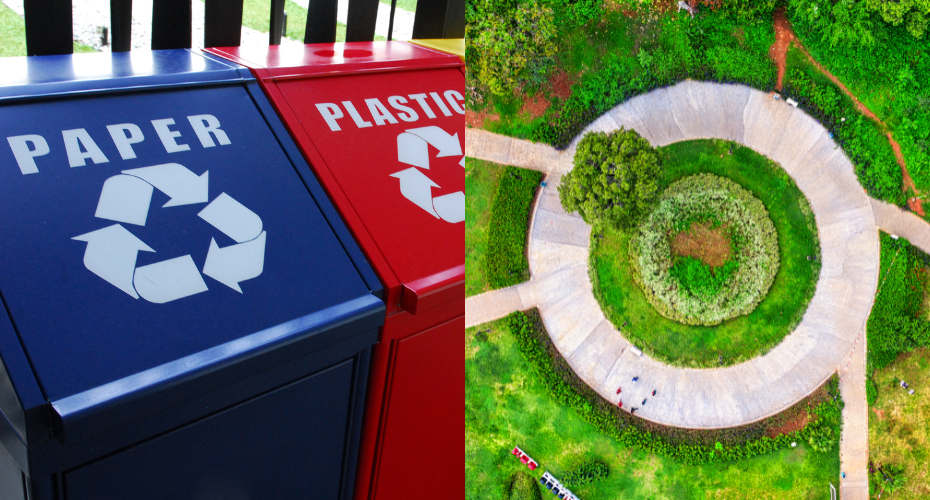
Recycling is what happens at the end of a product’s life. You’ve used something, it’s no longer useful, and instead of sending it to landfill, it gets broken down and turned into raw material for something new.
That’s valuable – but it’s also reactive. By the time recycling kicks in, the waste has already been created. The product was designed, manufactured, sold and used without much thought for what happens next. Recycling is damage limitation, not prevention.
What the circular economy does differently
The circular economy asks a different question entirely: what if we designed out waste from the start?
Instead of a one-way journey from raw material to landfill, a circular economy keeps products, components and materials in use for as long as possible – through better design, reuse, repair, refurbishment, and sharing models, with recycling as a last resort rather than the main event.
In practice, that could mean:
- Designing products to be repaired or upgraded rather than replaced
- Building business models around leasing or subscription instead of one-off sales
- Recovering valuable materials from products before they become waste
- Rethinking packaging so it never needs disposing of at all
Recycling deals with waste after it exists. The circular economy tries to make sure less of it exists in the first place.
Why this distinction matters for your business
This isn’t just a semantic difference – it has real implications for strategy.
Cost efficiency. Designing out waste reduces raw material spend over time, not just disposal costs.
Resilience. Businesses that rely less on virgin materials are less exposed to volatile supply chains and commodity prices.
Innovation. Circular thinking often uncovers new revenue streams – refurbished product lines, take-back schemes, or servitisation models – that recycling alone would never surface.
Reputation. Customers, investors and regulators increasingly expect more than “we recycle.” Genuine circular strategies signal a business that’s thinking ahead, not just cleaning up after itself.
What this looks like across sectors
- Manufacturing: shifting from single-use components to modular, repairable designs
- Retail and fashion: resale, rental and repair schemes that keep products in circulation
- Construction: designing buildings so materials can be recovered and reused, not demolished into landfill
The common thread? None of these start with a recycling bin. They start with a design decision made much earlier in the process.
Moving from recycling to circularity
Recognising the difference is the easy part. Applying circular economy thinking within your own organisation – across product design, supply chains and business models – is where it gets more complex, and where most businesses hit an “implementation gap” between knowing the theory and making it happen.
That’s exactly the gap our Circular Economy Masterclass is designed to close.

Learn Circular Economy
With Us
Delivered by the University of Exeter Business School’s Centre for Circular Economy, in partnership with the Ellen MacArthur Foundation, the course helps you move beyond recycling-level thinking to build genuine circular value into your organisation – with practical tools you can apply from week one.
Related Resources