

How Household Moves Can Influence International Waste Flows
Written by guest writer
While the environmental conversation around moving usually focuses on the carbon emissions associated with transport logistics—the fuel burned by container ships and cargo planes—there is a more insidious, tangible environmental cost that is often overlooked. We rarely calculate how the act of uprooting a life and replanting it elsewhere contributes to linear consumption patterns and significantly impacts international waste flows.
A household move is a critical friction point in the lifecycle of products. It is a moment when the perceived value of goods often clashes with the logistical reality of transporting them. From a circular economy perspective, international relocation represents a massive “leakage” event, where tons of functional, durable goods fall out of the economic loop and into the waste stream, only to be replaced by new virgin materials in the destination country. Addressing this requires moving beyond seeing relocation merely as a logistical challenge and viewing it instead as a material flow problem that demands circular solutions.
Strategies for a Circular Relocation
To align household mobility with circular-economy principles, movers benefit from shifting away from one-way disposal habits and toward practices that keep materials in use for longer. The process starts well before departure. With enough lead time, individuals can sell or donate furniture, appliances, and household goods through local digital marketplaces instead of discarding them at the last moment. This approach keeps items circulating in the community and reduces the overall footprint of the move.
During planning, many people also explore sustainable ways to relocate abroad, especially when they want an eco-friendly international move built around smart packing and conscious resource use. Packing and decluttering with care—such as separating items for donation, recycling, or reuse—reduces the shipment weight and limits unnecessary waste. Additionally, choosing eco-friendly moving supplies, including biodegradable materials and reusable containers, supports a lower-impact transition.
Once settled in the destination country, shifting from ownership to access-based solutions can further reduce waste. Furniture and appliance rental programs, including emerging Product-as-a-Service models, offer flexible furnishing options for expats who may not want to purchase items they will later discard.
Finally, selecting a green moving company strengthens the sustainability profile of the relocation. Providers who prioritize consolidated shipping, fuel-efficient logistics, and reusable packing systems help decrease emissions and resource consumption across international routes.
The Linear Trap: Why We “Dump and Run”
The driving force behind relocation waste is often a regrettable economic disconnect. It is frequently cheaper and undeniably more convenient to discard high-quality items in the origin country and repurchase them in the destination country than it is to pack, insure, and ship them. This economic reality encourages a “dump and run” mentality that is antithetical to material reusability and other principles of a circular economy.
When a family moves intercontinentally, durable goods—washing machines, sofas, heavy wooden furniture, and varied appliances—often end their functional life prematurely. They aren’t broken; they are simply inconvenient. This premature disposal creates a sudden injection of discarded materials that complicates existing international waste flows, overburdening local municipal waste systems that may not be equipped to handle a sudden influx of bulky goods.
Furthermore, the psychological allure of “starting fresh” in a new country drives significant demand for new products upon arrival. That stimulates linear production cycles, often encouraging the purchase of “fast furniture” and temporary household goods meant to fill an immediate need rather than last a lifetime. The result is a dual-sided environmental impact: the unnecessary creation of waste at origin and the stimulation of resource-intensive virgin production at the destination.
The Packaging Problem: A Global Waste Tide
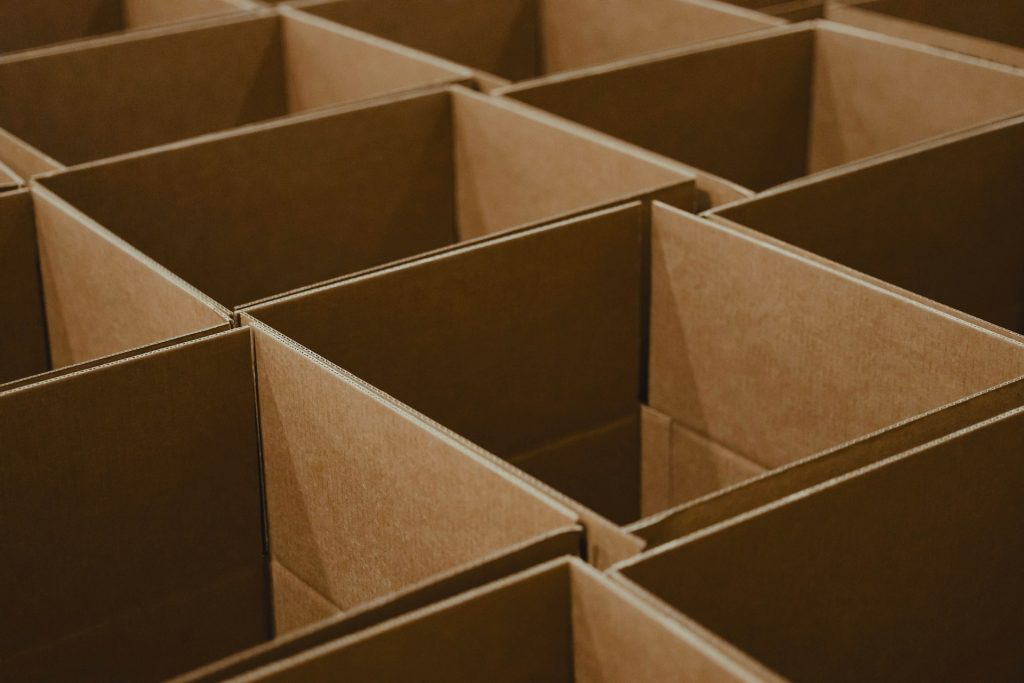
Beyond the items being moved, the movement itself generates an enormous volume of auxiliary waste. That isn’t something you should ignore — the logistics of protecting household goods during a volatile sea or air voyage rely heavily on single-use materials. We see mountains of virgin cardboard, kilometers of plastic bubble wrap, Styrofoam peanuts, and plastic shrink wrap used for a single journey and then immediately discarded.
Unlike industrial shipping, which utilizes standardized containers, household goods vary wildly in shape and fragility, leading to excessive, non-standardized packaging. Once the boxes are unpacked in the new country, this packaging material becomes immediate cross-border waste. Packaging generated in London ends up burdening the recycling or landfill infrastructure of Sydney or New York. This phenomenon adds a distinct, high-volume layer to international waste flows that is difficult to manage because it is highly distributed at the household level rather than concentrated in industrial zones.
Systemic Solutions: Policy and Industry Standards
While individual choices matter, systemic change is necessary to truly close the loop on relocation waste. We need policy interventions that incentivize retention over replacement.
One promising avenue is the development of Digital Product Passports (DPPs) for furniture and appliances. If an item carries a verifiable digital history of its materials, repairability, and origin, it becomes easier to value it correctly for resale across borders or prove its worth to customs officials, reducing the incentive to dump it due to bureaucratic friction.
Furthermore, the logistics industry needs to move toward the standardization of reusable packaging for household goods. Similar to how standard shipping containers revolutionized global trade, the development of universal, durable, reusable shipping crates for household items—which circulate globally rather than becoming waste after one use—would be a game-changer. That requires industry-wide cooperation to create a reverse logistics network, shifting the paradigm from linear consumption to circular systems that redefine international waste flows.
Household Moves Can Influence International Waste Flows
A household move is a significant disruption in material flows. Currently, that disruption inevitably leads to waste generation on a massive scale, reinforcing a linear “take-make-dispose” model that the planet can no longer afford. By recognizing relocation as a critical node in the circular economy, we can begin to design out waste.
Through a combination of better individual planning, the adoption of access-over-ownership models, and systemic industry changes in packaging and logistics, we can ensure that moving our lives doesn’t mean leaving a legacy of trash behind, ultimately curbing the destructive volume of international waste flows.


